
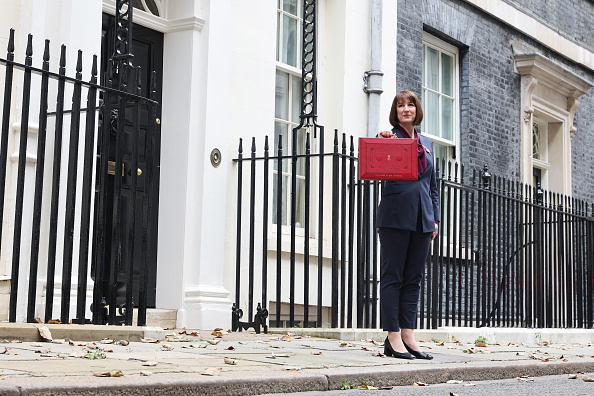

Chancellor Rachel Reeves has announced the Autumn Budget for November 26, 2025 – around a month later than it’s usually held.
Read on for a little more context or go straight to What could happen in the Autumn Budget 2025.
In a pre-Budget briefing on November 4, Reeves said that she will make ‘necessary choices’, which is looking like tax rises.
The OBR predicts that growth will be at 1.9 per cent in 2026, though they have downgraded the productivity forecast to one per cent per year. Growth was at a lower-than-expected at 0.1 per cent for the July-September period.
The International Monetary Fund (IMF) estimates that the UK will be the second-fastest major growing economy in 2025. However, we’re predicted to have one of the highest rates of inflation in the G7 nations in both 2025 and 2026. Inflation was at 3.6 per cent in October.
Reeves’ main focus is curbing inflation and borrowing costs. Figures for September 2025 show that government borrowing is at its highest for five years, at £20.2 billion, up £1.6 billion since September 2024.
She said she is sticking to her ‘non-negotiable’ fiscal rules. These are:
- Day-to-day government costs will be paid for by tax income, rather than borrowing by 2029-30
- To get debt falling as a share of national income by the end of this parliament in 2029-30
Various tax changes have been floated around the media watering hole, such as a windfall tax on bank profits, reforming property tax and/or reforming tax on gambling. Rumoured changes to inheritance tax and cuts to capital gains tax and dividend tax allowances have been going around, too. This reduces the value that business owners can get on dividends and the sale of their business assets.
When is the Autumn Budget 2025?
This year, the Autumn Budget falls on 26 November 2025.
What time will it happen?
It’s normally on shortly after 12:30pm, when Prime Minister’s Questions (PMQs) is over, and it will last around an hour.
How can I watch the Autumn Budget 2025?
The Budget will be broadcast live on the BBC and streamed on ParliamentTV.
What could happen in the Autumn Budget 2025
Tax raises are expected (as much as £10bn-£20bn, according to S&W). There will be less form-filling for businesses, as she announced at an investment summit in Birmingham on October 21. According to the BBC, it includes reforms to the company merger process and the measures will save £6 billion a year by the end of the parliamentary term. Small businesses won’t have to submit lengthy reports to Companies House, either. Beyond that, the detail is light.
We’ll share what we know so far (though it’s still predominantly speculation), and we’ll be updating this article when we find out new information.
Expanding sugar tax to producers of sugary milk drinks
The sugar tax is being extended to the likes of mass-produced and imported milkshakes and lattes. ‘Open cup’ drinks prepared in cafés and bars, including your customers’ morning lattes, are exempt. If you use plain cows’ milk or no-sugar-added alternatives, they’re also exempt. However, if you sell pre-packaged sugary milk drinks, then those are included in the tax.
The threshold for the sugar tax is being reduced from 5g to 4.5g sugar per 100ml. Businesses will have until January 1, 2028 to reduce sugar in their drinks.
Lowering the VAT threshold
The VAT threshold has been sitting at £90,000 since April 2024, which was a major relief to small businesses. In fact, it hasn’t gone below £81,000 in the past ten years. There is rumour of it decreasing after the Budget, potentially bringing thousands of small businesses into the VAT-paying band.
A hike on dividend tax
The Telegraph reports that a four per cent hike across all tiers of dividend tax could be on its way. That means basic rate will be 12.75 per cent, the higher rate will sit at 13.75 per cent and the additional rate will increase to 43.35 per cent.
A move towards e-invoicing
Under these rules, businesses would have to share electronic invoices to their customers, automatically copying in tax authorities when the invoice is issued. The argument for this is that it would reduce VAT loss through error and fraud.
VAT on taxis
The Telegraph reports that the government is proposing a 20 per cent VAT charge on all private hire bookings. At the moment, most independent taxi drivers don’t meet the £90,000 VAT threshold. The thinking behind this is that the likes of Uber and Bolt generate a lot more revenue.
The Treasury reckons that this will generate £750 million for the economy. However, more expensive fares could put passengers off hiring a cab and hit independent cabbies’ revenue.
Restrictions on salary sacrifice
After HMRC released research uncovering employers’ attitudes to salary sacrifice for pensions, rumours have surfaced that this could come up in the announcement. According to IFA Magazine, over 90 per cent of employers think that restrictions will be placed on the scheme. It’s worth noting that this research was commissioned under the previous government, though.
Salary sacrifice is where employees ‘sacrifice’ some of their salary for higher contributions into their pension, a desirable alternative for employers since their NICs increased in April. The Treasury could place a cap on how much employees can sacrifice. Alternatively, they could remove the national insurance or the tax exemption – or both.
The most recent rumours swirling around suggest that it salary sacrifice perks could be limited to £2,000 a year.
Pay-per-mile on electric vehicles (EV)
A 3p per mile tax is being proposed for electric vehicles in a move towards a ‘fairer system for all drivers’. If it were introduced, it would come in around 2028. Tax on hybrid vehicles would be lower.
National insurance contributions for partnerships
There’s rumour of an employer-style national insurance being introduced for partnerships, according to Saffery.com. As this would affect a business’ overall spending pot, it could affect growth and hiring for these companies.
Frozen tax thresholds
National insurance thresholds freezes are set to carry on until 2028, paving the way for a stealth tax, aka ‘fiscal drag’. For the self-employed this could push you into more tax and other contributions without an increased income in real terms.
National insurance for landlords
One possibility is to apply national insurance payments to landlords based on rent, according to The Times. This move would raise a predicted £3.2bn per year. Leaked proposals suggest that landlords would pay the same eight per cent tax as self-employed do.
Freezing rail fares
Regulated train fares (including season tickets and some off-peak returns) in England are to be frozen until March 2027.
Another National Minimum Wage rise
Reeves has confirmed that Minimum Wage for workers over the age of 21 will rise to £12.71 in April 2026, a 50p increase on the current figure. Those aged 18-20 will get 85p per hour extra, going up to £10.85 per hour. The rate for under 18s and apprentices will be going up by 45p to £8 per hour.
Employers paying the Real Living Wage will have to increase staff pay to £13.45 per hour for outside London (an 85p rise) and £14.80 per hour for those in London (a 95p rise). They have until May 1 2026 to enact the rise but are advised to do so as soon as possible.
What’s more, there are still changes to come in the imminent Employment Rights Bill, which is in its final stages.
Employment Rights Bill – what’s in the legislation? – We take a look at Labour’s Employment Rights Bill and how the business community has reacted to the measures
Business rate reforms
Labour has promised two permanently lower multiplers for retail, hospitality and leisure businesses with rateable values below £500,000. More details on all multipliers are expected to be announced for the 2026/27 tax year.
According to the government’s business rates interim report, Small Business Rates Relief (SBRR) is under review, with a view to reducing the ‘cliff edge’/sudden jump element of it. Many consultation respondents said that rates on secondary commercial properties is really in need of reform. A Transitional Relief package is to be announced in the Autumn Budget, so listen out for it if you have a large rateable value increase on the horizon.
Merging the Valuation Office Agency (VOA) with HMRC, which will happen by the end of the financial year, could mean that changes to business rates are made faster in future.
Tax changes
Despite nationwide backlash from businesses and landowners, proposed inheritance tax changes look set to go ahead in the new tax year. All it needs is confirmation in the upcoming Budget. Rumours are swirling around a lifetime cap on gifts that you can give tax-free.
There’s also some chatter around either increasing or reducing the VAT threshold, the latter of which would be very unpopular with small businesses.
What is the VAT threshold? – At what point does your small business have to start paying VAT? Should you voluntarily pay VAT? And what are legitimate ways to stay under the VAT threshold?
Making Tax Digital
After many, many delays, Making Tax Digital is set to be introduced for income tax from April 2026. Find out what you need to know at our Making Tax Digital hub.
What do small businesses want?
Organisations representing small businesses frequently speak up about what they want to hear in the announcement.
More support for regional businesses
The SEIS scheme needs reform, as David Smith, co-founder and partner at DSW Ventures, told Small Business: “The Autumn Budget is a crucial moment for the Government to show it understands what early-stage businesses, especially those outside the South East, need to grow. The Seed Enterprise Investment Scheme (SEIS) has played a vital role in supporting start-ups, but its current limits are no longer fit for purpose. The £250,000 cap, set in 2022, has already lost significant value to inflation and barely stretches far enough to fund even a small tech team for a year.
“Post-Brexit policy changes have also created more flexibility than many realise. HMRC’s distinction between Minimal Financial Assistance and SEIS means the scheme sits outside the UK’s newer subsidy limits, suggesting the Treasury may have more freedom to raise the SEIS cap, potentially beyond £350,000.
“Updating the limit would be particularly transformative for the regions. In London, investment momentum tends to continue after SEIS funds are used, but in the regions, capital is scarcer and investors more cautious. When the SEIS ceiling is reached, companies often hit a funding wall.
“Regional incentives targeted by postcode sound appealing but could be easily manipulated. A universal uplift to the SEIS limit is simpler, more effective and the most credible way the Budget could boost regional innovation and level up the UK’s startup landscape.”
Reduce cost of living and focus on AI and exports
Michelle Ovens CBE, founder and CEO of Small Business Britain, said: “The chancellor is right to focus on productivity, cost of living and international trade. These are the things that can make the biggest difference to small businesses.
“With signs of optimism rising and the economy hopefully turning a corner, we need to build on this momentum and offer businesses support to make the most of opportunities.
“We absolutely need to see the cost of living reduce to free up consumer spend – small businesses have felt the drop in customer spend first-hand. As we move into 2026 it is vital that people start to feel the impact of lower interest rates in their pockets.
“I’d hope to also see a greater focus on AI in the Budget – this has huge potential to be a total gamechanger for small business productivity and success.
“Export too can be the silver bullet in driving small business growth that benefits the wider economy. The latest data shows that only 22 per cent of small businesses currently export. Yet exporters are more likely to grow and to survive. Being a trading nation we need to showcase our incredible small businesses more on the world stage. There are positive moves to encourage more small businesses to export – especially with tomorrow’s Great British Pitch campaign – and we need to double down on more efforts like this over the coming years.”
Tax reforms
UKHospitality‘s #TaxedOut campaign wants the government to apply a maximum discount for hospitality businesses under £500,000 rateable value, exempting larger hospitality properties from the business rates surcharge. It also wants to see national insurance contribution exemptions extended to young people and people returning to work after being on welfare. Finally, UKHospitality want VAT on the hospitality sector to be brought down from 20 per cent to the EU average of 10-13 per cent.
Support for young entrepreneurs
Ex-cricketer Michael Vaughan, a recent investor in supplement start-up, Uthful, has come out in support of young people who want to start their own businesses.
City A.M reports: “Within any business, if you’re getting hit all the time with National Insurance and many other taxes that are coming to fruition, inflation is driving the price. So those people that are starting out to create a business will go ‘I don’t think I can make this work’
“Young people can come up with the greatest ideas and we have to make sure that there’s a platform there for young people to go ‘okay, I’ve founded a business and there’s a real pathway and a road map for that business to be successful.”
Repeal IR35 reform
Contractor UK wants to repeal IR35 reform, the legislation introduced to deal with ‘disguised employment’. “By imposing on them and their engagers a set of onerous requirements and risks, the OPW [off-payroll working] rules threaten this once-nimble workforce, creating shortages and driving skilled professionals abroad,” said Teodora Dimitrova FCCA.
“Repealing IR35 reform would head off that reality. A repeal of the 2017 and 2021 frameworks would also restore confidence, attract talent, and let UK businesses access the expertise they need without fear of HMRC penalties.”
What small businesses don’t want
Small business owners themselves are very clear about what they don’t want: more/increased costs, red tape, stealth taxes and lowering of the VAT threshold.
Read more
What are business rates? A guide for small businesses – What are business rates, how much are they and do tenants have to pay them? Sophie Attwood of Colliers answers your questions