
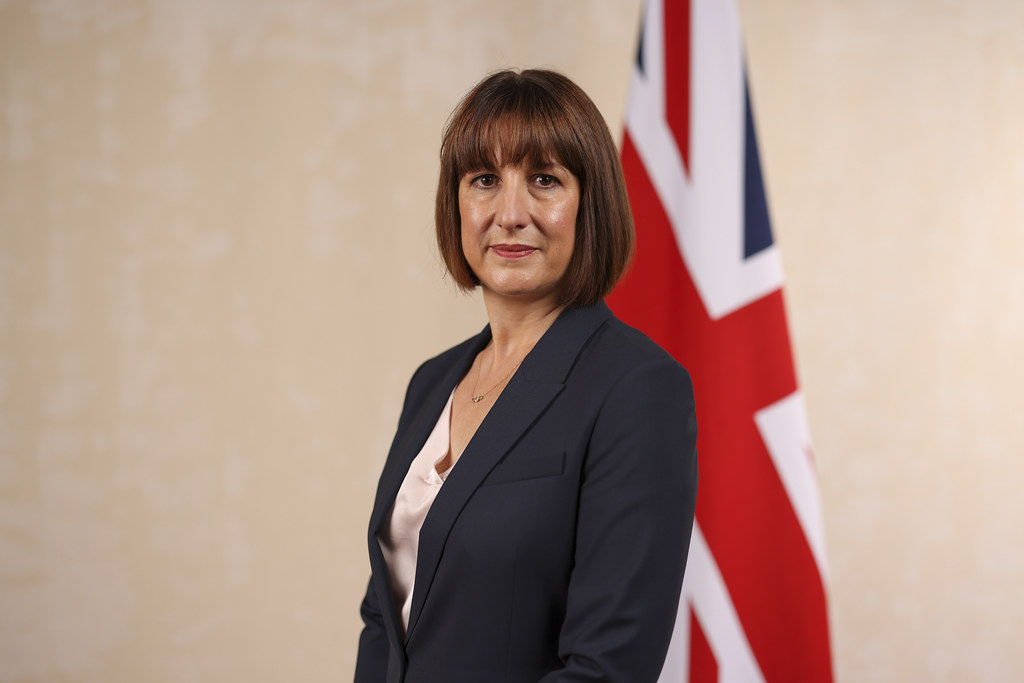

Rachel Reeves has made her Spring Forecast 2026 announcement and reacted to the Office for Budget Responsibility (OBR) forecast.
As predicted, there wasn’t much today, with further announcements being made in the coming weeks. Here’s what she had to say.
Spring Statement/Forecast 2026 live blog
12:59: Reeves ends speech.
12:54: Set to borrow less than G7 average. Public sector borrowing to fall from 4.3 per cent to 3.6 per cent to 2.9 per cent to 1.8 per cent in 2029/30.
12:50: ‘Harnessing powers of AI’ to benefit entrepreneurs. ‘Three major choices to determine future economy’ to be announced in two weeks’ time.
12:47: Employment support and guaranteed jobs. Reform of apprenticeships. More plans will be set out in the coming weeks.
12:44: OBR updated growth forecasts – average growth across period remains unchanged. Growth slower in 2026 (1.4 per cent to 1.1 per cent) and faster in 2027 and 2028 to 1.5 per cent in 2029 and 2030. GDP growth of 5.6 per cent across whole parliament.
12:42: OBR expecting inflation to come down faster than they predicted in autumn.
12:39: Confirmation that there will be one major fiscal event per year.
12:36: Reeves starts her speech.
Expert reaction
There are a couple of items which haven’t been mentioned, such as the OBR forecasting that inflation will increase to 5.3 per cent this year. “Government debt as a share of GDP has nearly tripled over two decades, borrowing has remained around 5 per cent of GDP for the past four years, and borrowing costs are among the highest of advanced economies,” the OBR website says. “Significant risks, including from conflict in the Middle East, mean outcomes both substantially above and below this forecast are possible.”
Other experts in the business realm felt there other significant gaps in the announcement.
Policy chair of the Federation of Small Businesses (FSB), Tina McKenzie, said:
“Inaction from the Chancellor is not enough for the UK’s 5.7 million small businesses and self-employed who are being squeezed by cost pressures and facing a new cost crunch about to hit in April. We’re a month away from employment costs going up, business rates going up and energy bills going up. The Chancellor missed the chance today to address the costs stack about to hit small firms.
“The downgrading of the growth forecast for this year will be no surprise to small businesses, where cost burdenshave already started reducing growth plans, cashflow and job creation in our local communities.
“Given the heightened global tensions of recent days, if there is another energy price crisis the Government must stand ready to bring forward a package of help for small business energy consumers, akin to during the last huge price spike.
“As the April costs stack bites, the Chancellor must give assurance that she’ll take decisive action to ease the taxes and costs imperilling small firms and the self-employed, and in turn imperilling the jobs, opportunities and local prosperity they could otherwise bring.”
Vipul Sheth, MD of Advancetrack, said:
“Thousands of businesses are feeling the strain of the government’s economic decisions, and the Spring Statement presented a real opportunity for the administration to reset its approach and provide meaningful support to business owners – yet the government chose to bury its head in the sand.
“Businesses are closing, investment is slowing, and more entrepreneurs are questioning whether the UK remains the right place to grow. The government could have put a stop to that in a number of ways – for instance, by reversing last year’s changes to Employers’ National Insurance Contributions
“As someone who built a business from the ground up, I understand the risks entrepreneurs take and the resilience required to succeed. But there comes a point where hard work and ambition are not enough to offset policy decisions that make growth harder. If we genuinely want a thriving economy, we should be strengthening incentives for those who take that risk, including expanding Business Asset Disposal Relief so founders are properly rewarded for building and scaling successful companies. The message must be that UK plc is open for business, and success will be supported, not penalised.”
David Williams, head of group risk at Everywhen, comments:
“Today’s Spring Budget delivered no new announcements directly affecting employee benefits, a move that was widely expected and consistent with the government’s intention to avoid major policy changes in the Spring update. While we hoped for minor tweaks to help support employers and employees, the absence of change also brings a welcome period of stability for organisations who are still planning their benefits strategies around bigger changes announced over the last 18 months.
“Encouragingly, the broader economic backdrop continues to improve with lower inflation and interest rates. With this improved environment, many employers may feel better placed to invest in their people now or as part of future budgeting later this year – strengthening reward, wellbeing, and benefits packages. So, while no news is good news right now, it is important for the government to combine an improving outlook with momentum generated by activity such as the Keep Britain Working report and start to build future policy decisions around recommendations that can improve the productivity of the UK through healthy workforces.”
Sachin Agrawal, managing director for Zoho UK, commented: “The reality for many UK business leaders, is cost pressures and uncertainty is still as high as ever. Businesses are navigating an environment where wage growth and higher input costs are forcing leaders to rethink operational processes to prioritise productivity, automation and smarter use of existing resources to maintain profits. Strategies that focus around long-term business resilience remain extremely important to have the most chance at long term success.
“Business leaders still want to invest and grow in the current economic climate, but they are doing so more selectively by investing in technologies that deliver clear efficiency gains in order to remain competitive. Many vendors are under pressure to deliver more value as demand shifts. In this turbulent market, businesses need to refocus their investments and operating models to keep pace with global change.”
Kate Hayward, UK managing director at Xero, said:
“The Chancellor’s pro-growth message is likely to feel at odds with reality, particularly for small businesses who are still managing the fall-out of a difficult winter and likely bracing for another year of uncertainty.
“Our data shows sales growth hit an 18-month low in the December quarter, a ‘make or break’ period where the festive boost that many were banking on simply never arrived. Labour-intensive sectors like hospitality are particularly exposed as they navigate rising overheads and flatlining demand. A low-key Spring Statement is unlikely to offer much comfort to those industries that desperately need measures which relieve pressure on the bottom line and give them the confidence to get back to investing and growing again.
“There might not have been any major surprises today but many will still be feeling deflated after hoping for more focus on small businesses. Now is the time to take stock – review forecasts, do some scenario planning and see if you need to adjust your plans so you have the resilience to handle any changes and another year of sluggish growth and higher costs.”
Benjamin Craig, associate director at Ayming UK, said:
“Growth comes from stability. That’s what businesses have been asking for time and again, and until they genuinely feel they have it, they’ll keep pushing for it.
“What firms need most is the confidence to plan properly. They need to know that the framework in place today will still apply in two, three or four years’ time. Investment decisions aren’t short term. They take years to deliver results, and if there’s a lingering concern that policy might shift, businesses will naturally hold back.
“There’s also a broader perception issue. The government has appeared distracted by infighting, and whether that’s fair or not, perception shapes confidence. Even strong ideas, like those in last year’s Industrial Strategy, lose impact if businesses aren’t convinced there’s a clear and credible plan behind them. The priority now should be to provide consistency and give businesses the stable environment they need to scale and innovate.”
Ben Willmott, head of public policy at the CIPD, said:
“Against an uncertain geopolitical backdrop, it’s critically important that the government creates conditions that improve confidence and stability for businesses to deliver job creation and skills development.
“We welcome the Chancellor’s recognition of the challenges that many young people face entering employment, particularly the collapse in apprenticeship starts, and we’re encouraged to hear the Government will be setting out more reforms to support young people in the coming weeks.
“However, meaningful progress will require bold action. Introducing an Apprenticeship Guarantee for 16 to 24-year-olds, a measure strongly backed by employers, would help ensure many more young people have a clear pathway into work.
“This means meaningful consultation with employers and where necessary compromise on key measures in the Act still to be decided in secondary legislation. The Government must also ensure there is a well-funded communications campaign to ensure employers are aware of the changes ahead of time and adequate resources are allocated to Acas, so smaller businesses in particular have access to the support they need to comply.
“More broadly on growth, we need to see measures that will help employers across all sectors of the economy invest in skills and innovation. For example, ensuring the new Growth and Skills Levy helps employers invest in training their workforces to tackle skills shortages and supports the technology adoption that can improve productivity.”
Read more
Spring Forecast 2026 – what small businesses should expect – The Spring Forecast 2026 is coming up on March 3. What can we expect to see that’ll affect small business owners?
Autumn Budget 2025 and how it affects small businesses – Here is a round-up of the key announcements for small businesses from the Autumn Budget 2025