
If you run a single pub, restaurant, or cafe, it would be understandable for you to think that a modern hospitality Point Of Sale (POS) system might be over the top for your business. Marketing by some POS providers can create this impression, as everyone likes to talk about their big well-known customers, multi-site capabilities, and enterprise features. Many are priced with these large businesses in mind too, all but ruling out the small business owner as a prospective customer.
However, good hospitality POS software can have as many great features for a small business as a large multi-site group, and the fees can easily be justified, by the time they can save & revenue uplift they can bring, not to mention the stress they can alleviate for the small business owner.
In this article we look at some of the key features to look for in a hospitality POS system.
What is a POS system?
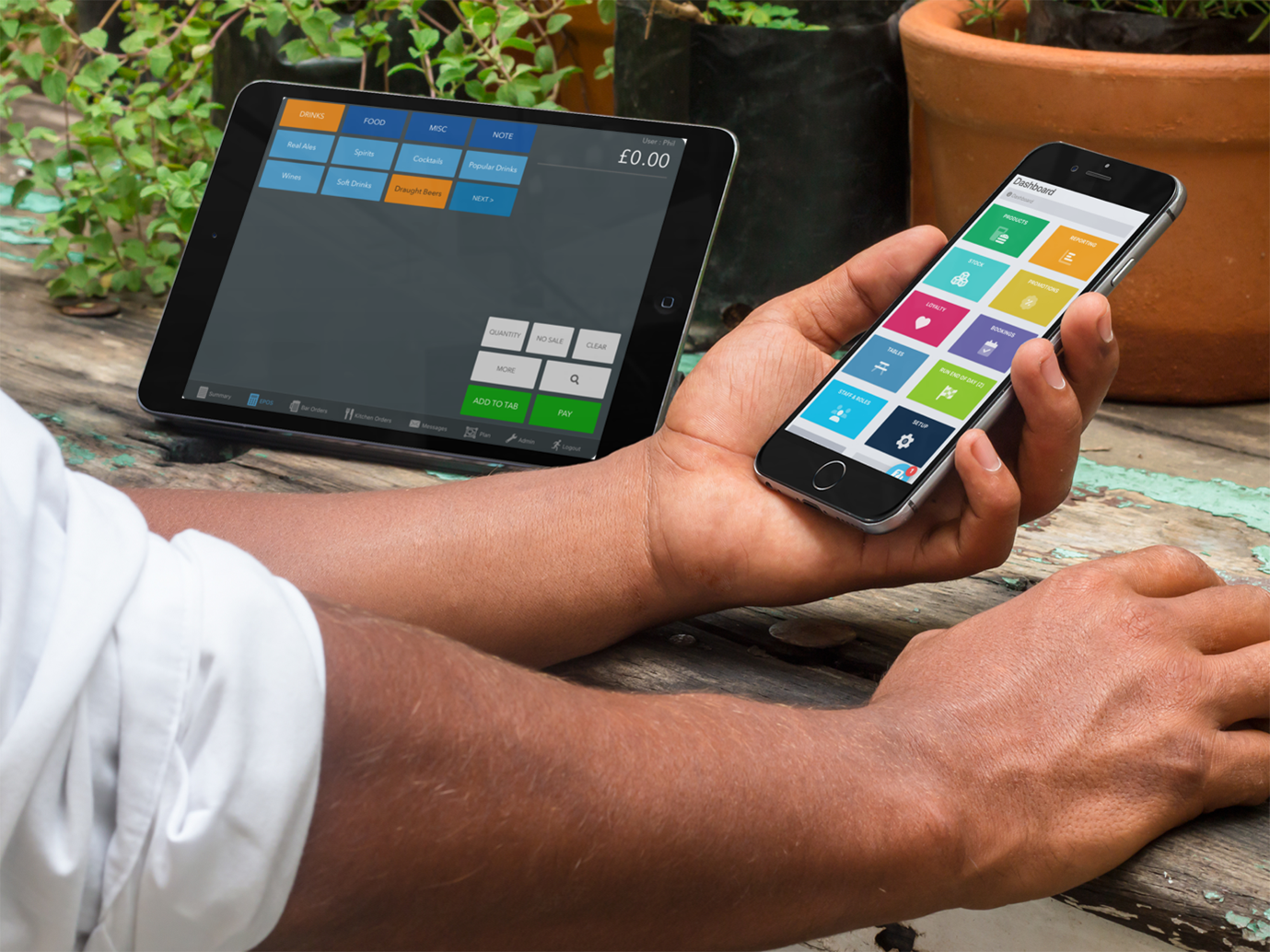
A POS (point of sale) system is a combination of hardware and software that allows a business to process sales, manage day-to-day operations and gain insights into customer transactions.
The hardware includes terminals, card readers, receipt printers and barcode scanners. The software includes payment processing, inventory management and employee performance.
Speed of service and ease of use
POS software designed specifically for hospitality will be built with speed of service and ease of use at the forefront.
From taking orders & payment at the bar or counter, adding orders to tables, splitting bills or recording tips, each process should be designed with the operator in mind. This means clear, simple steps to complete the task in the shortest time possible.
With the high staff turnover of the hospitality industry, purpose-built EPOS should also be very intuitive and user friendly, so new staff members can get to grips with the system from the start of their first shift.
The benefits of all of this are slick service, reduced waiting times, and more customers served. These benefits alone can justify the price tag of many systems.
Industry relevant reporting
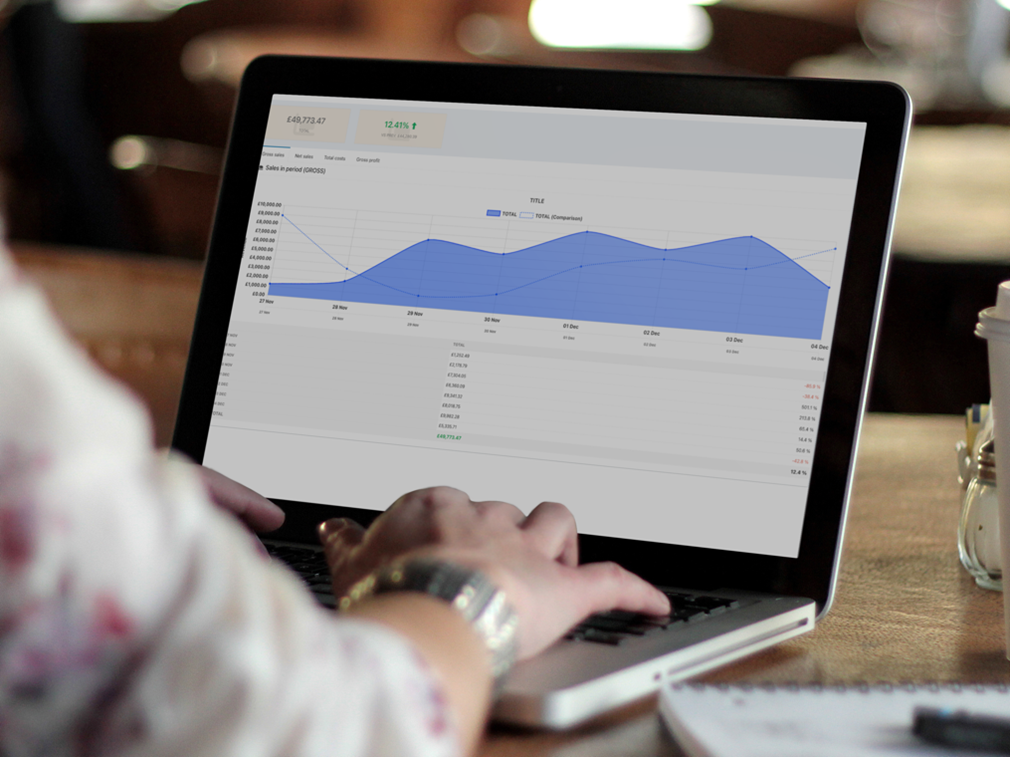
A benefit of any POS system is access to itemised reporting, to be able to see not just your total sales, but what has sold well and what hasn’t.
An industry-focused POS will offer this but will take it a step further to give you the reports that are important to you as a hospitality operator.
For example, for an industry where sales fluctuate so much over the course of a week, it’s important to have sales comparison reports that adjust the prior year period to align to the same days of the week as the current period. This gives you a like for like comparison. Comparing to the exact same date the year before will be comparing a Saturday with a Friday, which is unlikely to show you much of use.
Staff wages are one of the biggest costs for a hospitality business, so reports on staff costs and how these compare to sales are vital to ensuring you are running a profitable business. Having a real-time view of your wage percentage directly on the POS system also enables you to make last minute staffing decisions if needed.
There are many other reports that are important to us in the hospitality sector, such as stock and wastage, cash variances, tips and service charge, discounts and promotions, and food and drink service times.
All of these are equally as important to a small business as a large multi-site.
Knowing your margins
Making a good margin on the food and drink you sell is vital to being profitable. A good hospitality POS system should show you the gross profit (GP) you are making on each item when you set your sales and cost prices. For items with recipes the cost can be automatically calculated from the ingredients.
Sales reports will then show the GP you should have made for any period based on your sales and cost prices.
Finally, running stock takes on the system will show the GP you are making after any wastage or stock loss. All of this is available without needing to fork out for an external stock taker – a cost that can be a struggle for a small business.
Save time ordering stock
Another benefit of having a good stock procedure in place is your system can use your current stock levels and recent sales history (or stated PAR levels) to automatically generate orders that you can send to your suppliers. Not only does this save you time, but also reduces the possibility of errors.
Loyalty
Loyalty schemes aren’t just for big businesses, but the complexity of setting them up can be a real challenge for small business. This is a shame as it deprives them of the benefits – driving repeat business and building a stronger connection with your customers.
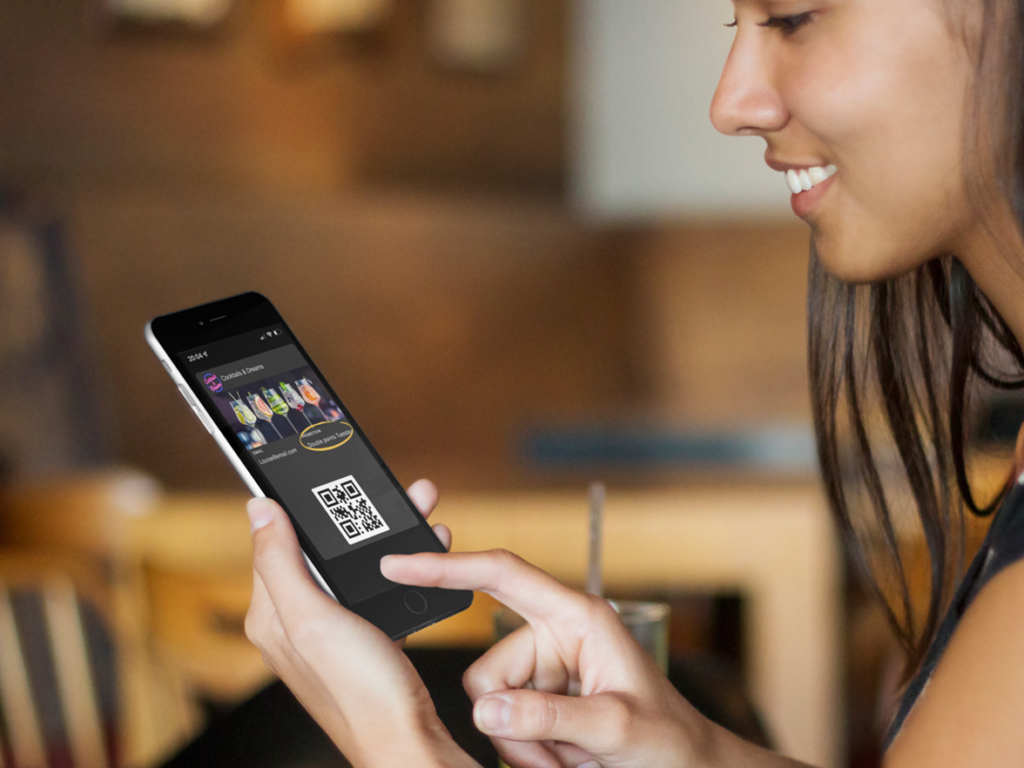
An effective loyalty scheme needs to make it easy for customers to sign up, and then to scan their loyalty pass to receive their points or benefits. It also needs to be easy for the operator to use the data on visits, spend and purchase history to send relevant, targeted marketing communications to encourage members back into the venue.
Most hospitality EPOS systems are now available with loyalty systems built in. This means members can sign up on your website and receive a digital loyalty pass that they can scan directly at the till to earn points or receive promotions. It also means all the data on their visit and purchase history is on one system, making it easy to filter to send relevant marketing communications.
The information stored on a POS system for loyalty points can then be used for email marketing campaigns or personalised offers. 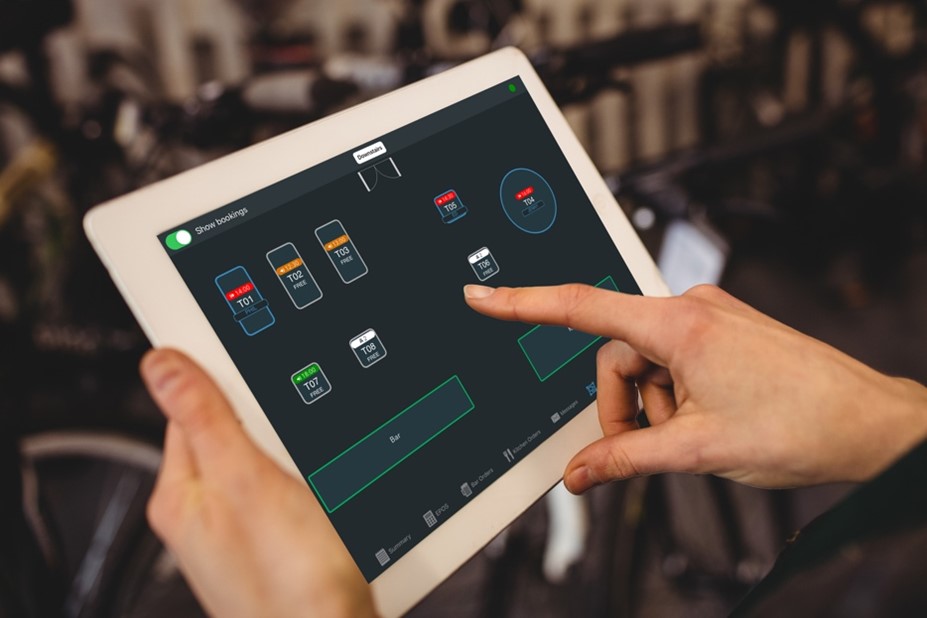
Built-in booking system
Many small businesses now use a booking system to keep track of bookings and enable customers to book online. However, managing bookings can be time consuming for a small business, where the owner operator can end up trying to manage new bookings and respond to requests all while working on shift.
This can be made much easier with a good hospitality POS system with a built-in booking. With bookings feeding straight into the POS system there is no need to log in to a separate system to view your bookings or have a laptop open at the bar. Instead, bookings can be viewed directly on the POS system, with arrival and departure times overlaid on your table plan.
Alerts can be triggered on the POS system for new bookings, requests, or cancellations, making it easy for an owner operator to keep on top of bookings while working front of house.
Accounting integration
Whilst built in features can often be more beneficial to a small business than trying to integrate multiple systems, an area where an integration can be very beneficial is accounting. Most good hospitality POS systems have integrations with popular small business accounting packages such as Xero and Quickbooks.
Sales and payments, and any petty cash expenses can be posted to your accounts every day without any manual work for you or a bookkeeper. With some other widely available tools to automatically create bills from invoices & receipts, a large part of your bookkeeping can be automated.
Summary
Every small business is different, and not all the above features will be relevant to all businesses, but small businesses in hospitality can get at least as much from a good POS system as their large counterparts. Some features can even provide more benefit to a small business, where time is precious, juggling multiple tasks is a reality, and simplicity is key.
Looking for a hospitality POS system? Check out Lightspeed

- Prices start from £79 per month.
Read more
- 15 EPoS systems for restaurants and cafés – Having the right ePoS system in place can boost your business in far more ways than just payments. Here are 15 ePoS systems to check out
- Ways to address staff retention issues in the hospitality industry – High staff turnover can affect your business’s performance. Find out how you can retain key staff for longer